Couples that meet with wedding chaplains these days typically have similar goals. They seek a wedding ceremony that feels heartfelt, refined, and deeply significant. Traditional Japanese weddings perfectly embody these desires. They do so through honor, respect, familial duty, and understated reverence. Incredibly, these elements are still potent today. They are not diluted by scale or theatrical flair.
Instead, they’re founded in intent, affection, and significance. You probably wouldn’t imagine it given how “traditional” typically plays out. Wedding traditions just look grand and impactful when they explode into fireworks or 40 bridesmaid choruses. But traditional Japanese weddings carry weight in their delicacy. The real meat of any ceremony relies on the gestures. It also relies on the quiet acts, the respect, and the attention to detail. Many chaplains embrace these elements.
That, and whether or not the tradition will help them weave in their family lineage seamlessly. They do not want to stuff in random, potentially awkward symbolism. That can leave them looking and feeling sheepish, even as the flowers are breathtakingly perfect. Japanese wedding traditions make their mark through whispers and solemn actions rather than loud proclamations and visual displays of opulence.
They aren’t about out-doing anyone. They’re about respectfully honoring tradition and the people who have walked this Earth before us. Whether a wedding couple desires an entirely traditional Japanese ceremony, a blend of Japanese and Western rituals, or simply wants to incorporate a few respectful nods to heritage, a seasoned wedding chaplain can serve as the perfect navigator. They help them build this perfectly calibrated ceremony. In this article, we will look at seven key Japanese wedding customs and traditions. They are some of the most significant.
Learn how wedding chaplains help integrate these symbols into memorable weddings that feel graceful and intimate.
1. The Shinto Ceremony and Sacred Setting
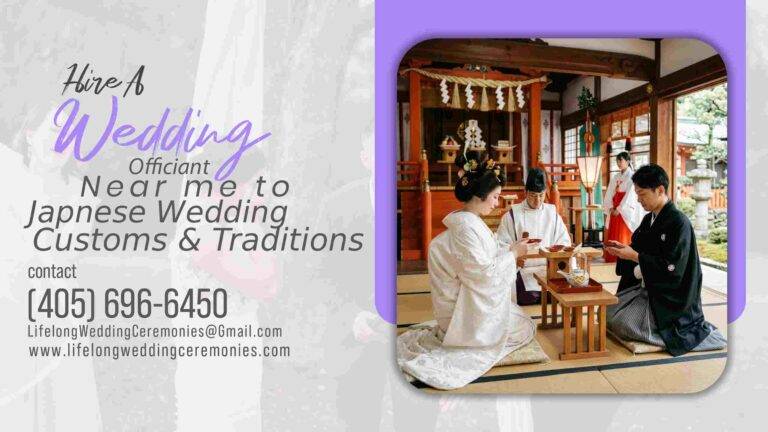
The Shinto rite is still considered the more prestigious part of a traditional Japanese wedding. The venue would ideally be within the precincts of a Shinto shrine or another sacred site. That helps evoke reverence and formality. The formality of the setting is itself highly symbolic. It encourages stillness and solemnity. It also enables the couple to center on their promises of mutual trust and the honor of their ancestors.
Wedding chaplains knowledgeable in the tradition highlight a profound respect for all elements of the rite. Not a single movement is idle or a single word is unnecessary. Not a beat is lost as the wedding is carried forth from one act to another. The pace of the proceedings enhances this feeling of permanence and calm. Many find this deeply soothing. It helps guests comprehend the weighty significance of the rite.
The Shinto wedding ceremony conveys notions of mutual affection and thanksgiving between the couple. It offers prayers to the kami for mutual support, good health, love, and enduring union. Also, it serves to acknowledge the wider family through their participation. It also integrates them into the ritual through the simple gift of their being present. That gives the ceremony meaning that extends beyond the duo alone.
This unique ritual can often incorporate aspects of modern receptions quite seamlessly. When executed thoughtfully, the couple can incorporate a blend of shrine traditions and modern party features into their special day. A wedding minister can guide the couple through the aspects that are deemed important to keep formal. They can also identify the areas that allow for more individuality. The aim is to pay homage to history without compromising any aspect of their individuality.
2. San-San-Kudo and the Sharing of Sake
San-San-Kudo is the tradition of “three three and nine.” It is a beautiful and moving ceremony where the bride and groom share sake with three small sips from each of the three cups. In Japanese, the number three holds a special symbolic importance. It represents harmony and balance. It gives this powerful tradition a lot of weight.
How many of you saw this during your traditional wedding ceremony?
Because, let me tell you, not only is san-san-kudo one of the most traditional, symbolic, and time-honored elements of a Japanese wedding. For couples and guests alike, san-san-kudo is a very meaningful moment. It is a time to stop, slow down, and experience the moment together.
Whether they choose to keep the traditional symbolism, have it narrated by their wedding officiant, or make the cups their own with personalized colors or details, couples like to consider the following when determining the fit for their wedding ceremonies. This sacred exchange of three cups has become so important and recognizable as a deeply symbolic element. Couples can benefit immensely from the ritual of san-san-kudo. This applies no matter what kind of Japanese wedding they are planning. Traditional, modern, or blended.
3. Traditional Wedding Clothing and Symbolic Colors
Japanese wedding traditions are highly significant. Typically, the bride will wear a white garment known as a shiro-muku. White is synonymous with pureness and the commencement of a new union. It also shows the bride’s readiness to accept this union into a new family. At the reception, she may opt to wear a colorful iro-uchikake. The shift from white to bright color symbolizes the transition from wedding to celebration.
The groom can also dress in traditional Japanese clothing. A uniform such as the montsuki hakama is typical. Such garments will typically be chosen to complement the seriousness of the day. Combined, the overall imagery is balanced. It reflects the commitment to the formality of the wedding and the ceremonial respect afforded. The symbolism carried through clothing is often emphasized by a wedding chaplain to the guests. They may do this even before a single word is spoken.
Color has profound meaning in this regard. White symbolizes the virtues of purity and the humble willingness to start afresh. Red and gold follow at later stages. These are the colors of happiness, luck, good fortune, and prosperity. The shift between the colors represents the path to a wedding that is first filled with solemn devotion and ends with happiness.
Many contemporary couples may be inclined to take on elements of these traditions. They may only follow some parts strictly. There is no offense to these if performed with the highest standards of etiquette and with thoughtful selection. There are other alternatives to ensure no clashes. All clothing is worn in support of the marriage and for no other reason. It must also satisfy all of the requirements that the chaplain would have to convey.
4. Family Honor, the Nakodo, and Shared Responsibility
One important focus of Japanese weddings is family. While the union brings together two individuals, it also brings two families together. This is visible throughout Japanese traditions. Marriage is seen as having an influence on more than just two people. Wedding celebrations are viewed, in a significant sense, as family gatherings as well as commitments made between a couple. There’s another dimension to the proceedings because it means so much to other people.
Depending on a couple’s traditions, they may involve the services of a nakodo, or go-between. A nakodo essentially provides support between the two families. They are present to aid the new marriage as a trusted ally between people. This concept stresses the value placed on familial obligation and community bonds. Wedding chaplains, wedding celebrants, or officiants often recognize the importance of such family and community involvement. They do so in a more formal structure for their couple’s ceremony.
You’ll probably notice an element of formalization of family participation with a marriage in Japan. Compared to other weddings, it stands out. Parents are likely to be present and take their roles in the wedding. Parents might offer contributions or symbolic elements as they play a significant family role in a marriage. Some of this makes a good deal of sense given its effect of generational linkage. It could feel emotional for the couple involved. Even though it makes sense that it influences more than just two, even in the family-centric part of an event.
5. Engagement Gifts and the Meaning of Yuino
One more ritual, Yuino, is also related to trust. This gift-exchanging session between the two families signals not only trust, but also how serious this marriage promise can be. There can be as many meaningful gifts associated with stability, longevity, and harmony. It will then become more ceremonial to ceremonial, not as casual as it should be. That connects the oath and the wedding.
The types of gift exchanges can be various. Nevertheless, they all stand for well-wishing. Gift exchange means support from both sides in a wedding. For the families and the future pair, such a gesture encourages them to initiate their marriage. This is vital to wedding etiquette. They should reflect sincerity and have meaning for the couple.
Instead of parading their wealth, the gift exchanges express sincere wishes for a solid and peaceful future for the pair. Thus, it will be enduringly meaningful to them. Small wedding couples sometimes have a modified Yuino.
However, it would work in any case, as long as the significance is conveyed. A wedding chaplain should assist each family in better grasping the nature of these exchanges. They can even customize them into smaller rituals that fit in the family’s style and size of a ceremony.
6. Reception Etiquette, Speeches, and Guest Respect
In a Japanese wedding reception, there is a certain order that everyone naturally seems to be aware of. From the manner, the words, and the very focus of the attendees, there’s a sense of deference and reverence toward the bride and groom. In turn, the bride and groom respond with appreciation and a humble spirit. The entire reception maintains warmth but remains restrained. There is a keen understanding that the people have roles to fill.
Speeches, for instance, can contribute to a reception by speaking to the individuals’ nature and family support. They also speak to their shared future. These speeches may remain rather formal, but they are also full of sentiment. For instance, wedding chaplains can really appreciate this juxtaposition between rigidity and sincerity. For instance, by doing so, they facilitate a celebratory, yet solemn environment for those who attended the wedding.
Even in simple matters, there is a demonstration of regard. People arrive at the venue early, take part in the various stages of events with a great deal of care, and refrain from doing anything that would detract from formal portions.
By upholding such social codes, we demonstrate to each other how we value the occasion with attentiveness and gratitude. The couple that plans to arrange for a combined wedding may adopt this notion. They can make adjustments so as not to implement the particulars but rather adhere to the very notion of a decent celebration. A chaplain could guide him into creating and organizing such a wedding. It would emanate that notion with grace and sincerity.
7. Blending Japanese and Western Wedding Elements
It is now common practice for a lot of wedding couples to have what could be seen as the best of both worlds. This may consist of many elements, such as a traditional white kimono, a ring ceremony, plus a lavish banquet. In addition, it will include the bride’s personal vows, music, or a bridal party procession.
Provided all of these blend seamlessly together, this can be a truly spectacular occasion. If the right balance has been achieved, it is something quite magical. However, none of these may appear to be arbitrary or shoe-horned in as an unnecessary afterthought.
Conclusion
Traditional Japanese wedding ceremonies are enchanting and elegant. That is putting it mildly. While there are many beautiful wedding customs and traditions in Japanese wedding culture, each ritual holds significant meaning. It will make your wedding ceremony feel extra special. A Shinto ceremony, san-san-kudo, traditional dress, the concept of family honor, Yuino, and reception rules will give your Japanese wedding plenty of layers of meaning.
If you’re looking to plan a traditional Japanese wedding but are unsure of how to incorporate all of these meaningful details, wedding chaplains can offer your guidance and insight. Wedding chaplains have helped couples in Japan navigate wedding traditions in the modern age with respect, meaning, and love. Understanding the deeper symbolism in traditions you select can create a beautiful wedding experience for everyone. It can reflect the happy couple’s heritage and their lasting union.
