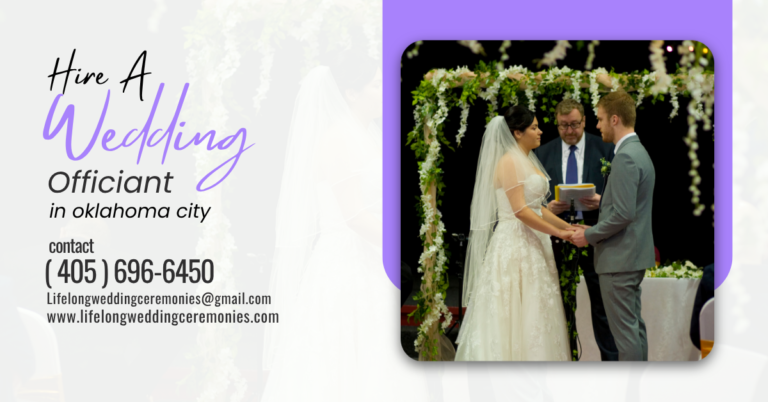
The wedding ceremony marks the beginning of your life together as a married couple. The person leading the service guides the ceremony. He decides how you will take your oaths and how your guests will understand your wedding story. Therefore, it is important to spend some time selecting your officiant.
A Wedding officiant in Oklahoma City should, therefore, match your wedding ceremony preferences together with your faith traditions and personal needs. You should feel comfortable sharing your ideas and asking questions.
Moreover, when the parts are properly matched, the planning process is simplified. Because it is then clear which elements go together, and it shows the best way to organize each component.
Why Should the Person Performing the Oklahoma wedding ceremony Be of Any Importance?
On your wedding day, the officiant has an important role. They carry out the ceremony from start to finish and also direct the exchange of vows. They start the readings and see that the whole thing moves at a good pace. A good officiant does not just turn up on the day; rather, they do the necessary work beforehand.
The Officiant Guides the Ceremony
To begin with, the individual conducting the ceremony greets the guests. Next, they give the reason for having gathered all of them. After that, the vows are said, the rings are exchanged, and the readings take place. Lastly, they appear as the steady hand that keeps the whole event moving.
The Officiant Helps With Planning
Even with one hundred ideas, you may not have a clear method of organizing them. Nevertheless, a skilled officiant takes the ideas and shapes them into a ceremony that proceeds well. They ensure the ceremony starts in a strong way, moves smoothly, and ends with the words that every couple looks forward to: you’re married.
The Officiant Works With Your Style
A few people select a religious ceremony. Others go for a straightforward civil one. In the same way, some people would like to combine two cultures or two religions into a single ceremony. No matter what kind of ceremony you choose, your officiant should know about it and be capable of conducting it.
The Officiant Gives Clear Directions
Both guests and couples need simple signals to know when to speak, when to exchange the rings, and when to take a step forward. For this reason, having clear instructions means that the ceremony can be easily followed and is stress-free for all in the room.
How Can You Tell Whether An Officiant Is Right For You?
First, your officiant will find out about your intentions. Next, they will guide you through the act of exchanging vows in front of all the people you love. Most importantly, the right person will make you feel at ease rather than nervous. If you have a short talk regarding the planning, this is a positive sign. In the end, you’ll quickly know whether the two of you are a good match.
Notice How the Person Listens
A good officiant gives you room to talk. You should never feel rushed while sharing your story or your ideas for the day. If they listen well now, they’ll lead well later.
Ask for Clear Answers
Wedding planning raises all sorts of questions. Therefore, an experienced officiant responds to them in clear and simple terms.
Discuss the Ceremony Style
Find out how the ceremony is arranged. For instance, some officiants use a standard script, while others prepare a personalized one for each couple. One method is not better than the other. You should make sure that you know which one you’re being given.
Think About Your Comfort
At your ceremony, you will make serious personal promises. That is why it’s important that you are comfortable with the person making them. If you trust in your officiant, then you can meet the day with genuine confidence.
How Does an Officiant Match Your Wedding Style?
The kind of ceremony you choose should determine your planning. For religious weddings, couples need special plans. It is different from those needed for a civil ceremony. Similarly, elopements have their own special format that is unlike a traditional wedding.
Religious Weddings
You should verify that the person carrying out the ceremony will perform religious rituals. For instance, this could involve praying, reading from scripture, and carrying out other significant religious activities.
Civil Weddings
The civil ceremony determines the focus by expressing love and making a promise on the part of two people who have shared beliefs and personal promises. If you prefer to have a non-religious wedding ceremony, look for an officiant who is able to prepare a service that includes no religious parts.
Interfaith Weddings
People who adhere to various religions can select some elements from their own religious traditions. The individual carrying out the ceremony should also explain how they have planned it.
Intercultural Weddings
Wedding celebrations of people from different cultures may come together by means of their traditional customs. The selections they make regarding wedding readings. The family duties that have been given to them, and their own individual ritual practices.
It is important that you make your wedding plan clear at once. This information will enable your wedding officiant to decide which elements of your family traditions should be included in the ceremony.
Check the Services an Officiant Offers
When you are deciding on an officiant, you should consider the different services on offer. The requirements for a wedding ceremony in Oklahoma will vary. This is because the number of guests you have, the venue you have chosen, and the type of ceremony you want all have an effect.
Lifelong Wedding Ceremonies provides couples residing in Oklahoma with a variety of wedding service options. The services include all types of wedding ceremonies, whether they are standard or personal. Couples can also choose to have their wedding at the courthouse or elope on the same day.
Moreover, it is also possible to have LGBTQ+ wedding ceremonies, as well as religious and secular services. Pre-wedding counseling sessions are also available for couples. Here is a brief overview of all of them:
Courthouse Weddings
A courthouse wedding can be conducted in a more abbreviated form. However, if the occasion permits, couples may still include personal vows, the exchange of rings, readings, or their selected words.
Same-Day Elopements
It is possible for a couple to get married simply by eloping without having a big gathering. They can still decide on particular words and include chosen sections in the service.
Personalized Ceremonies
In a personal ceremony, you have more control over the vows, the readings, the roles of the family, and the order of the service.
Premarital Counseling
Premarital counseling gives couples time to discuss values, family plans, faith, culture, and other subjects before marriage.
What Can the Officiant Do to Assist You with Your Vows?
In Oklahoma, vows are one of the principal elements of the wedding ceremony. They allow each partner to make promises before their relatives. With the correct officiant, you can get prepared without altering the message you wish to communicate.
Choose Words You Would Say
Your vows should sound like you. You do not need complex words or long sentences. Simple promises can express love, care, trust, respect, and commitment.
Think About Your Partner
Consider the qualities you value in your partner. You might write about kindness, friendship, patience, honesty, faith, or the way your partner makes you feel loved.
Think About Your Future
Marriage looks ahead. You can include promises about the life you want to build, the values you want to keep, and the way you want to handle future challenges together.
Decide How Long Your Vows Should Be
Long vows are not always better. A short set of honest promises can work well. Ask your officiant how much time the ceremony allows if you are unsure.
Role of the Officiant During the Ceremony
Once the ceremony starts, the officiant guides each part. The person needs to know the order, give clear cues, and help the couple and other people involved know what happens next.
- Welcome: The officiant opens the service and welcomes your guests.
- Introduction: The person explains the purpose of the gathering.
- Story: Selected details about the couple can form part of the service.
- Vows: The officiant guides each partner through the promises.
- Rings: The person introduces and guides the ring exchange.
- Readings: Family members or friends receive clear cues when needed.
- Closing: The officiant brings the ceremony to an end and announces the marriage.
How Can the Officiant Help Your Ceremony Flow Well?
In order for a ceremony to be well organized, it must begin in a clear way and then proceed to its main part before ending. The event should make sure that the guests do not need any further information. The person carrying out the ceremony will decide on the order of the service by arranging the various elements in order.
Start With a Welcome
To begin, the first section gives the guests a clear reason for their need to attend the event and, at the same time, discusses the marriage subject along with the wedding promises that you are required to make.
Share a Short Story
You need to include specific details in your relationship history so that the people attending will be able to understand how your relationship evolved. However, it isn’t necessary for the story to go into every aspect of the time you spent together.
Move Into the Vows
Your story can easily lead on to the promises, giving your vows a clear place and helping the service to build up to the main section.
End With Your Marriage
The last part can act as a conclusion for the service, and your officiant may announce the marriage before ending the ceremony with fitting words.
What Makes A Welcoming Officiant A Good Choice?
A wedding officiant in Oklahoma City should give both partners room to be themselves. Above all, an inclusive officiant respects different identities, beliefs, cultures, family structures, and ways of celebrating marriage.
LGBTQ+ Couples
Ask whether the officiant has experience creating ceremonies for LGBTQ+ couples. The wording should match your relationship and the names and terms you choose.
Interfaith Couples
People who have different faiths can talk about the religious parts they would like to include, and the officiant can assist in planning the chosen prayers, readings, blessings, or customs.
Intercultural Couples
Since different cultures may add particular elements to a ceremony, partners have the option of selecting family customs, readings, rituals, or other traditions from both of their sides.
Non-Religious Couples
The civil service might focus on love, friendship, commitment, and common values. There is no need for any religious content unless it fits your preferences.
Lifelong Wedding Ceremonies Help With Your Choice
Lifelong Wedding Ceremonies provides personalized wedding services for couples across Oklahoma. Dr. Makayla Saramosing serves as a wedding officiant and licensed wedding minister. The available services cover a range of ceremony styles and family backgrounds.
Personalized Wedding Ceremonies
People can talk over the details of their story, their vows, the readings, their traditions, their roles within the family, and the plans for the ceremony. Such choices can be used to determine both the wording and the order of the service.
Religious and Non-Religious Services
People have the option of having a religious ceremony or a service that is in accordance with their personal values and commitments. Interfaith needs can also be included in the planning.
Courthouse and Elopement Services
People who would like a simpler service can consider having their wedding at the courthouse or getting married on the same day. The ceremony can be kept simple yet still include personal remarks.
Premarital Counseling
Before they get married, couples can go to premarital counseling in order to talk about their values, how they communicate, their expectations regarding family, their faith, their culture, and their plans.
Why Personal Connection Is Important When You Are Selecting An Officiant
Your officiant will lead your vows and guide the ceremony in front of the people closest to you. For this reason, personal comfort matters. You should feel able to share your ideas and ask for help during planning.
For couples searching for the right Wedding officiant in Oklahoma City, experience is only one part of the choice. You should also look for respect, clear communication, good planning, and a willingness to understand your relationship.
A good match will make you feel more ready for the ceremony since you’ll know what will happen next, who will be taking part, and how your selected words will fit together.
Ready to Begin Your Journey?
Your love story deserves a ceremony that feels truly yours. Lifelong Wedding Ceremonies brings warmth, experience, and a personal touch to every wedding they officiate. Visit Lifelong Wedding Ceremonies today and let their team help you craft a beautiful, meaningful ceremony you will cherish forever.
Frequently Asked Questions
What does a wedding officiant do?
A wedding ceremony officiant in Oklahoma leads the ceremony, welcomes guests, guides the vows and ring exchange, introduces readings, and announces the marriage. The officiant can also help plan the ceremony before the wedding day.
How do you choose the right officiant?
Select an officiant who suits your ceremony style, respects your beliefs, takes your wishes into account, and communicates clearly. Find out about their experience, their ability to personalize the ceremony, the different ceremony options available, the planning process, and the role they will play.
When should you book your officiant?
Once you have decided on your wedding date and have some basic plans for the ceremony, book your officiant. This will allow you to spend time discussing your vows, the readings, any traditions, the roles of your family, the legal matters, and the order of the ceremony.
What questions should you ask an officiant?
Ask about ceremony styles, personal vows, religious or cultural traditions, family roles, planning, legal needs, and available services. Also ask how the officiant prepares the ceremony and guides everyone on the wedding day.
Should you choose a religious or civil officiant?
Choose based on your beliefs and ceremony goals. A religious officiant may suit couples who want prayers or scripture, while a civil officiant can focus on love, commitment, and shared values.
Can an officiant customize your ceremony?
Yes. An officiant can help include personal vows, readings, family traditions, cultural customs, blessings, rituals, and other chosen elements. You can work together to create a ceremony that suits your relationship.
What qualities make a great wedding officiant?
A great officiant listens well, communicates clearly, respects your choices, stays organized, and understands your ceremony style. The person should also guide each part of the service with clear and simple instructions.
Why is hiring a professional officiant important?
A professional officiant knows how to organize and lead a wedding ceremony in Oklahoma. Their guidance can help you prepare your vows, arrange ceremony details, understand your role, and move through each part with confidence.
