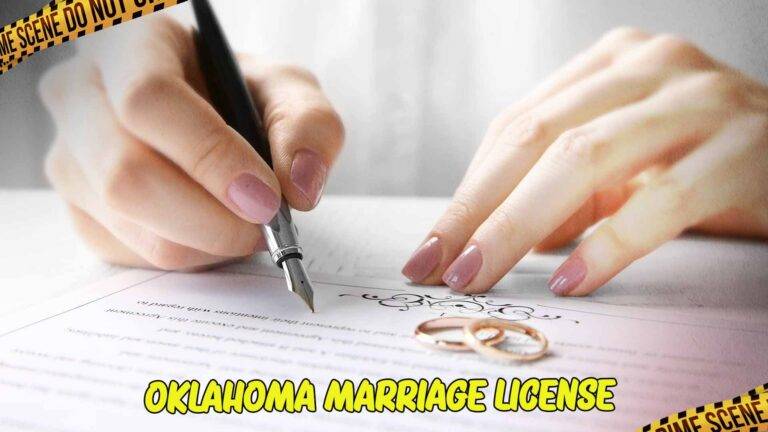
One of the most crucial functions that a wedding minister has to perform is to fill out an Oklahoma marriage license correctly. One little oversight may postpone the legal acknowledgement or lead to unwarranted troubles for the couple in the future. Being a minister, it will help you to know the specific process and be assured to advise couples successfully to ensure their marriage is legal. This guide breaks down the steps officiants should follow to complete a license accurately and professionally.
What an Oklahoma Marriage License Is
A county court clerk issues an Oklahoma marriage license, giving a couple the legal permission to marry within the state. The issuance of the license by the clerk will make it viable and will last for a period of ten days. Both of them will have to apply physically and give valid identification. A licensed officiant legalizes the marriage by signing the document after the ceremony. The couple must hold the ceremony within the license’s valid period to ensure legal recognition.
Information Required on the Application
Couples must complete their marriage license application at the county clerk’s office before the ceremony. They give their complete legal names, date of birth, and place of birth. The application further needs Social Security numbers to identify the current residential addresses. The two individuals should present a valid government-issued identification, which may be in the form of a driver’s license, state identification, or even a passport. You are a minister, and you ought to remind couples to ensure that they carefully consider this information before leaving the clerk’s office.
The Minister’s Role During the Ceremony
The roles of the officiant during the wedding ceremony are important in matters of law since a marriage license can only be validated after a due procedure has been followed. After both people exchange vows, both parties sign the marriage license using their full legal names exactly as printed on the document. Then the officiant records the ceremony’s official date and location in the required format.
After the ceremony, ministers should pause to review each of the entries. They should ensure that the spelling, dates, and places are the same as those in the application. Any insignificant mismatches will slow down processing or may need corrections in the future. By taking the couple step by step, step by step, the officiant makes the marriage record uncomplicated, legitimate, and enforceable in court.
Completing the Marriage License Correctly
Once the ceremony is over, the officiant has to fill out the other parts of the license. This involves giving the precise date of the ceremony and including the name of the city and county in which it took place. The officiant must clearly write their official name, sign it, include their title, and provide an address if required. In case you need witnesses, make them sign where there are areas provided. Clearly complete all fields and verify the information to prevent processing delays.
Submitting the License to the County Clerk
Once the license has been obtained, the officiant is expected to submit it immediately to the office of the same county clerk that issued it in the first place. Time is critical because once the clerk receives and files the document, the marriage becomes legal. Most of the counties are demanding submission within a particular number of days after the ceremony, hence ministers must avoid postponing this process.
The best is to send or post the license within one or two business days. Some officials may choose to hand-deliver the document to prevent postal loss or delay. The clerk must register the license before the couple can obtain certified copies of their marriage certificate. Timely filing will thus guard the legal position of the couple and portray the competence and integrity of the person officiating the marriage.
Obtaining Certified Marriage Certificates
Once the clerk processes the license, the couple can order certified copies of their marriage certificate. Couples typically need these copies to change their legal names, update insurance, bank records, or other official documents. Pairs may order more than one copy, but then one might have to pay a minimal fee to the clerk. Ministers usually advise couples to obtain these copies early to avoid future paperwork hassles.
Common Errors Ministers Should Avoid
Errors on marriage licences normally occur owing to incomplete or incorrect information. Unfinished areas, improper dates, or a lack of signatures create a problem. The other issue that is very common and delays official documentation is that of late submission. Thorough examination of the document prior to signing is a way of avoiding mistakes and protecting the couple and the officiant.
Moreover, ministers should avoid using nicknames or shortened names because the license requires full legal names as issued. Poor handwriting or variation in the colors of ink also leads to rejection by the clerk’s office. These minor details are to be paid special attention to in order to provide a good and even timely processing.
Conclusion
To ensure a legal marriage, it is important to fill out an Oklahoma marriage license correctly. When ministers follow each step diligently, they can guide couples efficiently and avoid common errors. Special attention, neat writing, and good time submission are essential in order that the marriage will be registered and legal. Handling the license correctly demonstrates professionalism and secures a safe and organized future for the couple.
And therefore, to obtain advice on the marriage licenses in Oklahoma and to enlist the services of an educated wedding minister, call us at www.LifelongWeddingceremonies.com or write us at LifelongWeddingCeremonies@gmail.com. You can also call or text (405) 696-6450.