Oklahoma Wedding Officiant
CELEBRATE YOUR LOVE WITH US
Whenever a couple plans to have a wedding ceremony, they must bring at least two adult witnesses with them to sign the marriage license. The State of Oklahoma requires at least two people to sign the marriage license, and it also mandates that both spouses and the wedding officiant sign it as well. Some people bring more than two people with them when they get married, as they have family and friends that can range in the tens or hundreds of guests. Our marriage officiants in OKC note that there are numerous options for wedding couples seeking to tie the knot about which family members, friends, and other guests to invite, which they have outlined below as follows:
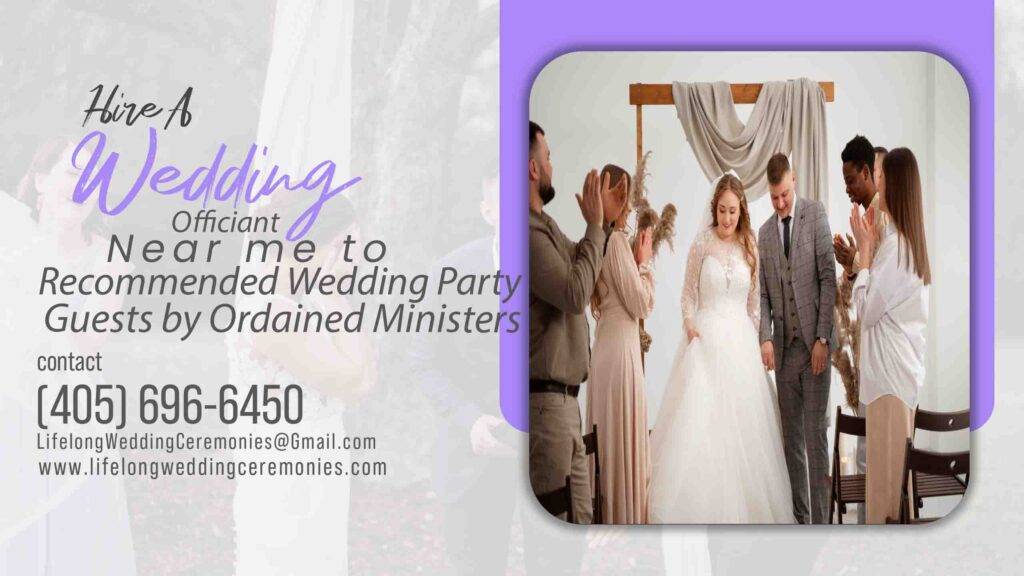 Our wedding pastors in Oklahoma City see plenty of couples who just want something exceedingly small and private. They may be serving in the military or are new to town, lacking family members and friends who can come attend their nuptials. Our military chaplains are more than happy to officiate smaller wedding ceremonies, be they simple signings or elopement ceremony packages. So, to satisfy the state’s requirements, they need only bring at least two adult witnesses who are at least eighteen years of age or older. Indeed, our Oklahoma wedding ministers can even help provide witnesses for a small extra fee, if our clients have no one at all to attend.
Many brides bring their male, female, and nonbinary friends and family members to serve as their bridesmaids and bridesmen. The bride can bring whomever she wants to stand by her side and assist her, especially her closest friends and family members. Gender does not matter in these circumstances. Our justice of the peace at Lifelong Wedding Ceremonies will gladly welcome them all!
Just as bridesmaids should certainly have their closest friends and family members by their side during wedding ceremonies, so, too, can grooms bring whomever they wish to stand by their side and support them. Males, females, nonbinary, and other gender nonconforming friends and family members are more than welcome. Some grooms bring their male friends in tuxedos or even dresses, and other future husbands bring female friends in dresses or tuxedos. Either way is simply fine with us!
Also, if one or more of the people getting married in Oklahoma is nonbinary, then they may certainly call their personal wedding assistants whatever they want. Here at Lifelong Wedding Ceremonies, we strive to tailor each wedding ceremony to the needs of our clients, so whatever they want is fine with us. Indeed, gender, like sexuality, is often on a spectrum.
Many couples, especially those who opt for larger wedding ceremonies, invite their parents, siblings, grandparents, children, aunts, and uncles. Others even invite cousins, nephews, and nieces. Some of the closest family members even serve as groomsmen, groomsmaids, bridesmaids, and bridesmen. Others serve as ring bearers, flower girls, the best man/woman/nonbinary person, etc.
Our wedding officiant in Oklahoma City will help show these individuals where to stand and when, if needed, because sometimes having a lot of people can be confusing. Indeed, many wedding clients have their closest family members and friends who will not be standing with them during the marriage ceremony sit in the front row. Sometimes other family members personally escort the older family members like grandmothers to the front row and walk with them as a show of respect.
You might be surprised at just how many of our wedding couples opt to have their cats, dogs, and birds assist with the wedding ceremony. They sometimes serve as bridesmaids, bridesmen, best men, groomsmen, groomsmaids, ring bearers, and flower cats/dogs. It is much more common than one might think, and in states like Colorado, cats, dogs, etc., may even serve as witnesses on a couple’s wedding license.
For those who prefer the Star Trek and Star Wars-style weddings, having a robot or other droid along to fill an important just makes great sense. Our ordained ministers in Oklahoma City have seen robots carry up rings and even drop flowers onto the floor, before the bride and her escort march up to the front. Indeed, some wedding couples even choose Star Wars-themed processional and/or recessional music to complement the other elements of sci-fi-themed, futuristic weddings.
Most couples also choose into invite extended members of their families, such as cousins, uncles, aunts, nieces, and nephews. Our justice of the peace notes that these individuals may opt to have their extended family members fill roles such as the close-knit wedding party, but many simply sit in the family sections of the guest seating areas.
Wedding officiants in Midwest City also note that most couples seeking to tie the knot in matrimony also invite their closest friends to celebrate the big life event with them. As with immediate family members, these best buds are most likely to fill the most non-staff vital roles common to most wedding ceremonies. Best friends of future spouses often serve in one or more of the vital, non-paid wedding roles:
These are men who are special assistants and confidants of a male who is getting married. They help the groom with various tasks, offer support and advice, make jokes to help ease nervousness and tension, and retrieve items for a man about to get married. Groomsmen play a vital role in wedding ceremonies that help make them more special and memorable.
Women can also fill the role of close confidant for future husbands seeking to get married. They do the same things as groomsmen we discussed above, but these individuals are female. Indeed, gender does not matter, and they may not be male or female at all but nonbinary or gender fluid.
Bridesmaids are the close confidants of the bride, helping her get dressed, keeping her and others from stepping upon her wedding train, and helping with other various wedding tasks. They often dress in the same dress color as the bride, and they stand with her by her side at the front during the wedding ceremony to both show support and to help with any unforeseen issues that may arise during the marriage ceremony itself.
Just as grooms may have bridesmen to assist them, so, too, can brides have bridesmen. As with groomsmaids helping men about to tie the knot as newlyweds, bridesmen are males who help brides in the same capacity as bridesmaids do. They may not be right there with the bride when she is changing though, but one never knows.
Both people who are getting married usually choose one extra special person each to serve as the top member of their immediate wedding party. This individual is always a closest family immediate member or other best friend to whom they are extra close. They may hold rings, help coordinate the wedding setup, and they are the top advisors to their respective bride/groom/nonbinary future spouse. The ones our ordained ministers in Oklahoma mentioned in the subtitles.
This individual helps the bride, if there is one, just as the other individuals we described above help the groom, if applicable. These are the best friends or closest family members of the bride, and our wedding pastors note that they help the bride hold her flowers during the wedding ceremony, keep the bride from tripping on her wedding dress train, and give extra advice and counsel to the bride. They may also help coordinate the bridesmaids and perform other wedding tasks.
The maid/matron of honor, man of honor, etc., serves as the head of the other special wedding party for the bride. She is the most important non-staff wedding party member for the bride’s side, and she helps the bride stay composed and helps the wedding flow more smoothly.
Our marriage officiants near me who officiate LGBTQIA+ wedding ceremonies also point out that other guests who are non-staff, non-family members, and who are not necessarily the best friends of the wedding couple also attend the nuptials. They are the acquaintances and other miscellaneous guests, and while still important, they rarely fulfill the same vital roles and tasks and do not often have the important responsibilities that immediate family members and close friends typically do.
Every wedding, even the smallest courthouse wedding ceremonies and elopement weddings, have hired staff of some sort. Without them, our ordained officiants and gay wedding ministers note that it would be next to impossible for the wedding ceremonies to occur. Indeed, these wedding vendors usually include, but are not limited to, the following:
The single most important wedding staff member of all marriage ceremonies is without a doubt the officiant. Without the person there to say the vows and to guide the couple through the actual ceremony itself. Transgender-friendly wedding ministers can even help the couple via a wedding rehearsal beforehand, so they can practice it first and work out any wedding kinks and bloopers before they occur.
Officiants help the couple decide the fine points of the marriage ceremony before they begin. Knowing these things in advance helps guide the flow of the wedding ceremony itself. These may include, but are not limited to, the following:
As you can see, experienced chaplains and other wedding celebrants can offer a plethora of experience and can help guide the flow of the wedding ceremony. Officiants are the most important staff members of all wedding ceremonies.
It is helpful to have experienced makeup artists and nail technicians to help apply makeup, do nails, etc. Choosing to hire a makeup and nail technician helps take the burden of these tasks off family members, as they may not even have the experience or skills to do the job correctly.
Like makeup artists and nail technicians, event planners for larger wedding ceremonies highly recommend hiring someone to help the wedding couple, especially the bride, do her hair exactly right. This big day is super important, and making sure it goes off without a hitch is essential. Thus, having a trained hair professional to help fix and style hair is a big bonus!
Wedding planners, also known as event coordinators and wedding coordinators, are vital for larger wedding ceremonies. They can help coordinate most or all the other wedding staff, as well as the couple and their guests. They work hard and are seldom inexpensive, but couples who can afford to hire the best wedding planner to assist them usually fare much better and experience less stress than those who do not.
Disc jockeys are also essential for larger weddings in Oklahoma that require someone to coordinate the music. Also referred to as music coordinators, these individuals may also help operate microphone the officiant and couple may use, and they must be adept at helping the couple select music tracks. Thus, having an independent staff member whose love and knowledge of music can help add to the atmosphere is essential.
Bigger wedding ceremonies often have food to feed the guests with, especially if they take longer and the couple expects they may bring gifts. Indeed, hungry guests are unhappy guests, and their patience will run thin of their bellies go empty for too long. A hearty meal can make a huge difference. A tasty meal and someone on hand who knows how to cook and deliver it to wedding guests is essential for a good time.
Most people like to record the memories of their wedding ceremonies. Event coordinators will usually recommend that the couple hire a wedding photographer and find the best wedding videographer to help them thoroughly document their wedding ceremony. That way they can have beautiful wedding videos and photos to post online and hang up around their home. The best ones are not cheap, but the lasting memories they can help make are well worth it!
When larger weddings offer wine and other spirits to wedding guests, it helps to have someone there who is knowledgeable of how to mix different drinks. Bartenders can also help verify guests’ age before allowing them to consume alcoholic beverages, and they usually have some nonalcoholic drinks on hand for minors and those who choose not to consume alcohol for a variety of reasons.
The final wedding staff member is that of the wedding security guard. These security officers can help deal with unruly guests, some of whom may get drunk during or after the wedding ceremony itself. They can also help prevent guests of the wedding couple from carrying weapons into the wedding venue and wielding firearms during the ceremony, if someone objects or something else goes terribly wrong. Security guards at weddings can also block the entrance of unwanted, bigoted, anti-2SLGBTQIA+ family members and so-called “friends” of the couple who might otherwise cause trouble.
Having the right attendees at your wedding ceremony can truly make all the difference, and we at Lifelong Wedding Ceremonies will always strive to do our best to make your special day as memorable and enjoyable as possible. Our ordained wedding officiants and lesbian wedding ministers hope this page has given our readers better insights as to whom they might consider inviting to help celebrate their nuptials with them as they tie the knot and become husband and wife, wife and wife, husband and husband, or partner and partner.

Enter your info below
